Hunting and Wildlife Magazine - Issue 228 - Autumn 2025
Words By: Darren Parlato
When I was last over in the Chatham Islands three years ago, I considered hunting an Arapawa ram, but I didn’t get a chance because I was only there for two to three days. This time, I had planned a week-long trip, which started on a Tuesday afternoon with a 1 hour 45 flight out of Wellington in an ATR72. Onboard, about half the cabin space was taken up with freight, comprising chilly bins of kaimoana—crayfish that is.
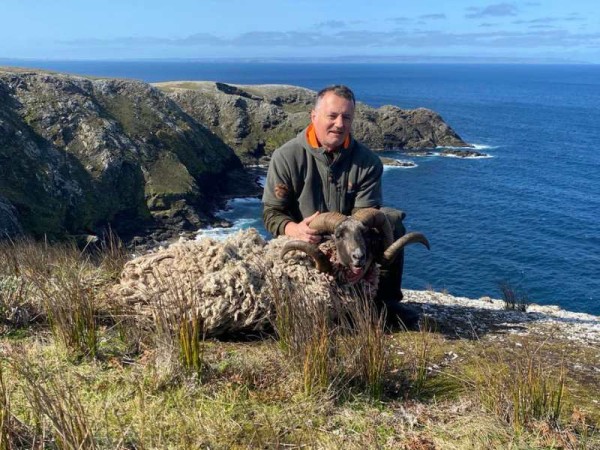
I was fortunate enough to have already met my clients—Anthony and Rena—about eight years prior on another trip to the Chathams. The family owns and operates a crayfishing boat out of Port Hutt, on the island's western side, and they also own 3,000 hectares of land in Waitangi West. Anthony introduced a flock of 50 Arapawa sheep from Pitt Island around five years ago, intending to have his flock on the coastal cliffs side of the farm. About 80% of the farm is in wild native fern and scrub, and there are also many wild pigs and wild cattle on the farm.
Access to the seaside cliffs of the farm, where the sheep reside, is about a 1.5-hour ride by 4x4 motorbike, through swampy fern land. On route, we got stuck a couple of times!
On the third day, Anthony asked me if I would like to hunt an Arapawa ram. Without hesitation, I said, “Yes.” I got to shoot a couple of rounds at a target to sight in the Tikka .223 that Anthony had lent me, before we left on our adventure.
That morning, we headed off on the bikes, arriving around 11.00am where the flock of three to four groups of sheep were. We spotted a mob of around 20 sheep, and I got out the binoculars and identified a ram with a good set of horns. At first, the sheep were running along the cliff face, so we had to stop and turn them around. This was to avoid them from getting further into a position where I wouldn’t have been able to take a shot, due to the shot ram falling over the cliff into sea and rocks below, into an unrecoverable position.
Once the mob started walking and running back, I identified the ram at the rear of the group; his body looked small, but he had a large set of horns. After about 50 metres, they stopped again. I lined up the shot from the rifle rest on the motorbike handlebars. “Bang.” But the ram kept running! “Bugger.” I ended up firing again at another sheep; a ewe this time. Down she went on the spot. Anthony wanted a meat animal as well. By that stage, the flock had run further along the cliffs in the other direction. They moved quickly and bunched up, making it hard to get a clear shot. So, we hopped back on the motorbikes and began the chase again. Once I was close to the flock again, I identified the same ram—standing in a group of three. What made the shot difficult for me was that his main body was behind another sheep. As the mob was aware of our presence, and I felt they were about to run, I quickly lined up a neck shot. “Bang.” Down went the ram on the spot! With a huge sigh of relief and excitement, I had my wild sheep down on the ground.
When I reached the dead ram, I noticed a bullet ‘nick’ in one side of the horns; bloody lucky! It had such wide, thick horn bases and large curls. Its fleece was very woolly with ferns and sticks all through it. I loaded and tied the ram on the motorbike while Anthony returned to collect the ewe I had shot earlier.
We headed back to the farm hut beside the sandy beach, where I caped out the ram. During this time, we cooked up some lunch—paua that we had collected from the rocks beside the hut, and venison sausages I had brought over, (there were no deer on the Island), along with a couple of celebratory beers.
I kept the back steaks for myself. Anthony suggested we keep the legs and shoulders as dog tucker for his pig dogs, rather than me taking them back home to mainland NZ.
Back at Port Hutt, we put the head in the commercial freezer at the fish factory that operates out of there.
The rest of the week, I spent diving, spearfishing, and surf casting from Port Hutt and Owenga (on the eastern side of the island). On my last day, I caught a good blue cod while surfcasting at the sandy beach at Port Hutt. I also worked as a deckhand for a day on Anthony’s crayfishing boat.
Once back home, I took my ram head out to Jason Goodyer at Ruahine Taxidermy to get mounted. He did ring me to say that I had made a hash of caping it out, but I had left just enough shoulder skin to cover the brisket shortfall, so he could mount it one day. Jason reminded me that he has a very good video on YouTube about how to cape out an animal correctly. This is a good reminder and refresher for anyone to watch before heading out into the hills when considering targeting a trophy animal.
I definitely recommend a trip to the Chathams for hunting, fishing and diving—I had a fantastic time.
Read Hunting & Wildlife Magazine
NZDA members receive an electronic version by email, and can access it on the NZDA app. Subscriptions and physical copies can be purchased online. Visit the NZDA Shop at www.nzda.shop
Missed an issue?
We make our older editions free to read online. Browse the back catalogue here.
Write for Hunting and Wildlife

Join NZDA To Help Us Advocate on Your Behalf